Kubernetes at the Edge Guide to KubeEdge for Edge Computing
Discover how Kubernetes extends to edge computing, enabling powerful container orchestration beyond cloud environments.

TL;DR
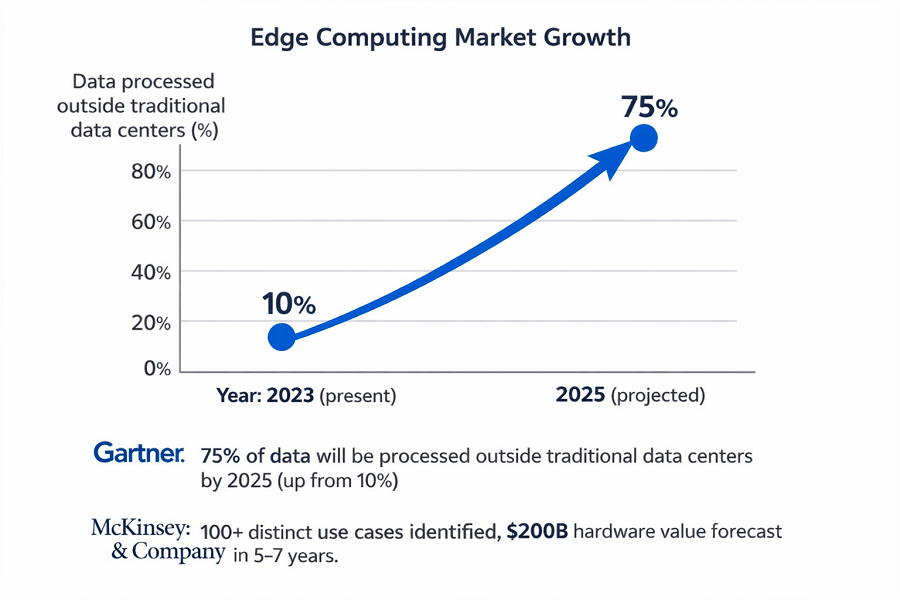
- Edge computing is exploding – Gartner predicts 75% of data will be processed outside traditional data centers by 2025 (up from 10% today). McKinsey sees $200B hardware market in 5-7 years.
- Kubernetes extends to edge – use K3s (lightweight, 40MB, ideal for Raspberry Pi), MicroK8s (Canonical, Ubuntu integration), or OpenShift (enterprise, centralized management).
- KubeEdge is CNCF project that bridges cloud and edge – enables offline operation (runs disconnected), bidirectional cloud-edge sync, and native device management. Components: Edge Core (on edge nodes) + Cloud Core (in cloud).
- Key edge architectures: centralized control plane with edge nodes, federated Kubernetes (multiple clusters), or distributed Kubernetes (each node independent cluster).
- Production use cases: smart manufacturing (real-time monitoring, predictive maintenance), intelligent transportation (traffic management, V2X), edge AI (local inference), retail analytics.
- Offline operation is critical – edge must work when cloud connectivity drops. KubeEdge buffers data locally, syncs when reconnected.
The burgeoning field of edge computing demands innovative solutions for container orchestration at the network's periphery. While Kubernetes reigns supreme in cloud environments, its capabilities are extending to address the unique requirements of edge deployments.
Developers are constantly striving to enhance the reliability and performance of their software while also seeking opportunities to minimize costs. One effective approach to achieving these objectives is through the adoption of edge computing, which is rapidly gaining traction across various industries.
As per Gartner’s projections, presently, only a small fraction, approximately 10%, of data is generated and processed outside of traditional data centers. However, this landscape is poised for a significant transformation by 2025, with an estimated surge to 75% due to the exponential growth of the Internet of Things (IoT) and the increasing availability of processing capabilities within embedded devices.
McKinsey’s research has further highlighted the immense potential of edge computing. Edge Computing Market Value:
| Metric | Value | Source |
|---|---|---|
| Distinct use cases identified | 100+ | McKinsey |
| Hardware value forecast (5-7 years) | ~$200 billion | McKinsey |
Understanding Edge Computing:
Edge Computing vs. Traditional Computing:
| Aspect | Traditional (Cloud/Centralized) | Edge Computing |
|---|---|---|
| Processing location | Centralized data centers | Near data source (IoT devices, sensors) |
| Latency | Higher | Lower (sub-10ms) |
| Bandwidth usage | Higher | Reduced |
| Offline operation | Limited | ✅ Supports offline operation |
| Best for | Batch processing, analytics | Real-time analysis, IoT, autonomous vehicles, industrial automation |
Key Advantages of Kubernetes in Edge Computing
- Scalability: Kubernetes facilitates seamless scaling of edge workloads based on demand fluctuations, ensuring optimal resource utilization.
- Resource Efficiency: By efficiently packing and managing containers, Kubernetes optimizes resource consumption, crucial in resource-constrained edge environments.
- Fault Tolerance: Kubernetes’ self-healing capabilities ensure high availability of edge applications by automatically restarting failed containers or migrating them to healthy nodes.
- Flexibility: With support for hybrid and multi-cloud deployments, Kubernetes empowers organizations to seamlessly integrate edge and cloud infrastructures, providing unparalleled flexibility.
- Edge Device Management: Kubernetes’ extensible architecture allows for the management of edge devices as first-class citizens, simplifying the orchestration of diverse hardware platforms.
Why Use Kubernetes at the Edge
Kubernetes, renowned for its capabilities in managing cloud-native workloads, seamlessly extends its prowess to edge environments, offering several compelling reasons to leverage it at the edge:
- Scalability: Kubernetes enables seamless scaling of edge workloads based on demand fluctuations, ensuring optimal resource utilization even in resource-constrained environments.
- Fault Tolerance: With self-healing capabilities, Kubernetes ensures high availability of edge applications by automatically restarting failed containers or migrating them to healthy nodes.
- Flexibility: Kubernetes supports hybrid and multi-cloud deployments, empowering organizations to integrate edge and cloud infrastructures effortlessly.
- Resource Efficiency: By eficiently managing containers, Kubernetes optimizes resource consumption, crucial for edge environments with limited computing power and bandwidth.
Kubernetes Edge Architectures
Kubernetes offers various architectural patterns for deploying edge computing solutions, including:
- Centralized Control Plane with Edge Nodes: In this architecture, a centralized Kubernetes control plane manages edge nodes distributed across different locations, ensuring consistency and ease of management.
- Federated Kubernetes: Federated Kubernetes extends Kubernetes’ capabilities to manage clusters across multiple locations, enabling centralized management and policy enforcement.
- Distributed Kubernetes: In a distributed Kubernetes architecture, each edge node operates as an independent Kubernetes cluster, offering autonomy and resilience in resource-constrained environments.
Kubernetes Edge Computing Distribution Options
Kubernetes offers several distributions optimized for edge computing, catering to diverse deployment requirements:
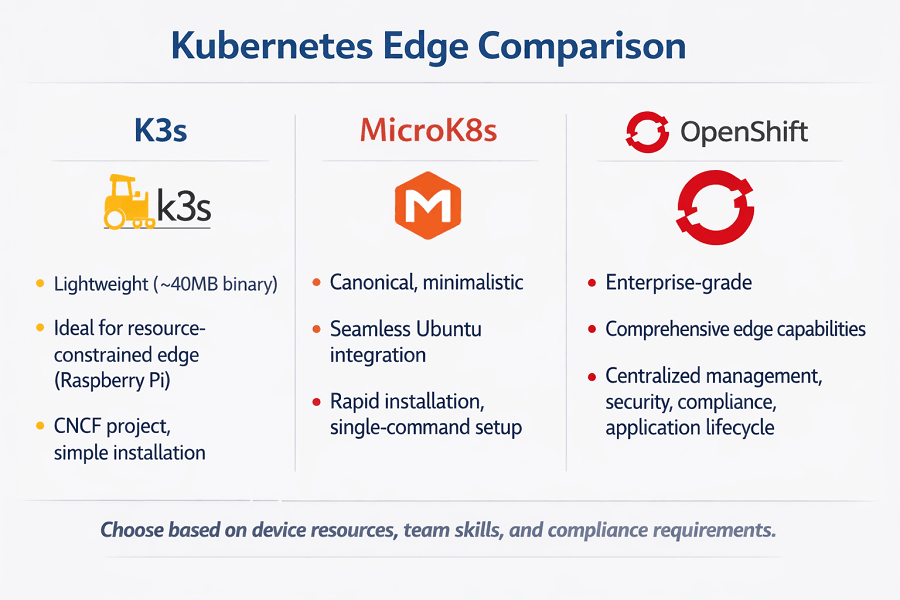
- OpenShift: Red Hat’s OpenShift Kubernetes distribution offers comprehensive edge computing capabilities, including centralized management, security, and application lifecycle management.
- K3s: Lightweight and efficient, K3s is a popular Kubernetes distribution tailored for resource-constrained environments, making it ideal for edge deployments.
- MicroK8s: Canonical’s MicroK8s provides a minimalistic Kubernetes distribution designed for rapid installation and operation on edge devices, offering seamless integration with Ubuntu-based systems.
K3s (lightweight), MicroK8s (Ubuntu), or OpenShift (enterprise) – we help you choose and deploy.
K3s: ~40MB binary, ideal for Raspberry Pi and resource-constrained edge. MicroK8s: Canonical, seamless Ubuntu integration, rapid installation. OpenShift: enterprise-grade, centralized management, security.
We help you:
- Choose the right distribution – Based on device resources, team skills, and compliance requirements
- Install and configure – Production-ready edge clusters
- Integrate with cloud control planes – Hybrid edge-cloud management
- Automate edge updates – Zero-touch provisioning and updates
What is KubeEdge?
KubeEdge is an open-source project that extends Kubernetes to the edge, enabling edge computing and device management. Developed by the Cloud Native Computing Foundation (CNCF), KubeEdge bridges the gap between cloud and edge environments, offering a unified platform for deploying and managing applications across distributed infrastructures.
KubeEdge Features and Benefits:
- Edge Computing: KubeEdge facilitates the deployment of edge computing solutions, enabling real-time data processing and analysis closer to the data source.
- Device Management: KubeEdge provides device management capabilities, allowing seamless integration and orchestration of edge devices within Kubernetes clusters.
- Offline Operation: KubeEdge supports offline operation, ensuring uninterrupted operation even in disconnected or intermittently connected environments.
- Edge-to-Cloud Synchronization: KubeEdge enables bidirectional synchronization of data and state between edge nodes and central cloud platforms, ensuring data consistency and integrity.
KubeEdge Architecture and Components:
KubeEdge comprises the following key components:
- Edge Core: The Edge Core component runs on edge nodes and manages local containers, devices, and edge computing resources.
- Cloud Core: The Cloud Core component operates in the central cloud platform and coordinates communication with edge nodes, managing edge applications and devices.
- Edge Hub: Edge Hub facilitates communication between edge devices and the Edge Core, providing a unified interface for device management and data synchronization.
- Cloud Hub: Cloud Hub orchestrates communication between the Cloud Core and edge nodes, enabling seamless synchronization of data and state between edge and cloud environments.
KubeEdge Use Cases:
KubeEdge empowers organizations across diverse industries with innovative edge computing solutions, including:
- Smart Manufacturing: KubeEdge enables real-time monitoring and predictive maintenance in manufacturing environments, enhancing operational efficiency and reducing downtime.
- Intelligent Transportation: KubeEdge facilitates traffic management and vehicle-to-infrastructure communication, optimizing traffic flow and improving road safety.
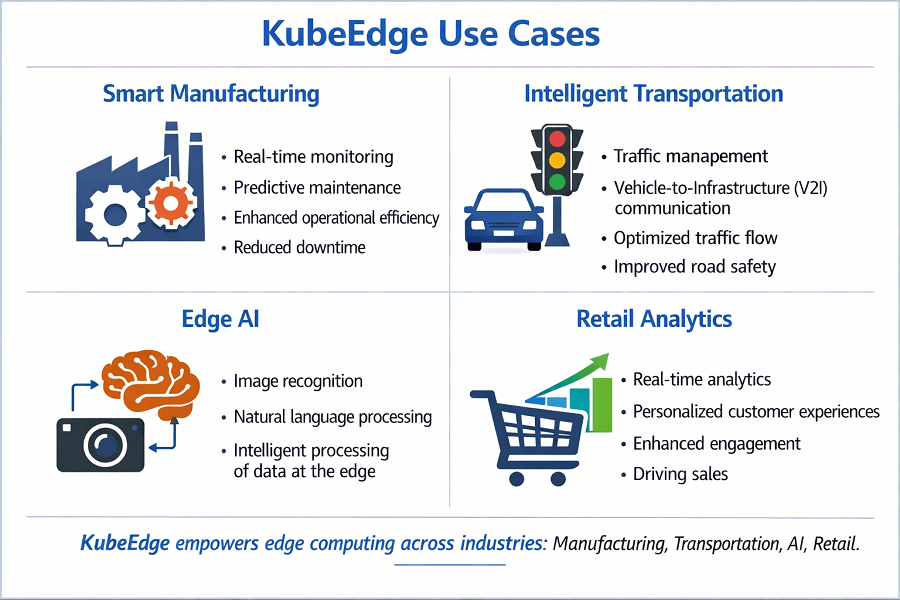
- Edge AI: KubeEdge supports edge AI applications such as image recognition and natural language processing, enabling intelligent processing of data at the edge.
- Retail Analytics: KubeEdge enables real-time analytics and personalized customer experiences in retail environments, enhancing customer engagement and driving sales.
What Next?
As edge computing continues to gain momentum, the role of Kubernetes in shaping the future of decentralized computing is undeniable. Organizations looking to harness the power of edge computing should explore Kubernetes-based solutions such as KubeEdge to unlock new opportunities and drive innovation in their respective domains.
Conclusion
Edge computing is not a niche, it's the next wave of distributed systems. Kubernetes, through distributions like K3s, MicroK8s, and projects like KubeEdge, brings container orchestration to resource-constrained edge environments. The benefits are clear: sub-10ms latency, offline operation, reduced bandwidth costs, and device management at scale.
KubeEdge extends Kubernetes with edge-specific capabilities: local container management, device synchronization, and cloud-edge bidirectional data flow. For IoT, autonomous systems, and real-time analytics, Kubernetes at the edge is not optional, it's the architecture. Start with K3s on a Raspberry Pi cluster. Add KubeEdge when you need offline operation and device management. Scale to enterprise with OpenShift when compliance and centralized control matter.
Frequently Asked Questions (FAQs)
What is edge computing and how does it relate to Kubernetes?
Edge computing is a distributed computing model that brings computation closer to where data is generated, such as IoT devices, autonomous systems, and industrial sensors, to reduce latency and bandwidth usage. Kubernetes, traditionally used in cloud environments, can also orchestrate workloads at the edge to manage these distributed resources efficiently.
What is KubeEdge and why is it important for edge computing?
KubeEdge is an open-source extension of Kubernetes designed to bring native container orchestration and device management to edge environments. It enables real-time data processing, offline operation, and synchronization between edge nodes and the cloud, making it ideal for distributed use cases.
What advantages does Kubernetes offer for edge deployments?
Running Kubernetes at the edge brings benefits like:
- Seamless scalability of workloads
- Efficient resource utilization in constrained environments
- Self-healing applications
- Flexibility to support hybrid cloud-edge infrastructures
How does KubeEdge help manage edge devices and applications?
KubeEdge extends Kubernetes functionality to handle edge-specific needs by offering components that manage local containers, synchronize data between edge and cloud, and support device communication, all while allowing some operations to continue offline if connectivity is lost.
What are common use cases for Kubernetes with KubeEdge at the edge?
Common KubeEdge Use Cases:
| Use Case | Application |
|---|---|
| Smart manufacturing | Real-time monitoring |
| Intelligent transportation | Optimized traffic management |
| Edge AI | Local AI inference |
| Retail analytics | Personalized customer experiences |