The Leadership Mistakes That Create Technical Debt
Technical debt starts with leadership decisions, not code. Learn which mistakes create debt and how founders can prevent them.

TLDR;
- Tech debt originates in leadership decisions, not code
- Key mistakes: Speed without boundaries, no technical ownership, refactoring as optional
- Companies spend 40% of IT budgets managing debt instead of building new capabilities
- Prevent it: Clear ownership, planned trade-offs with scheduled cleanup, 15-20% capacity for tech improvement
Technical debt gets blamed on engineers, but it originates in leadership decisions. Every shortcut, every rushed deadline, and every deferred investment reflects choices made at the top. When founders understand this connection, they can prevent debt before it cripples their startup.
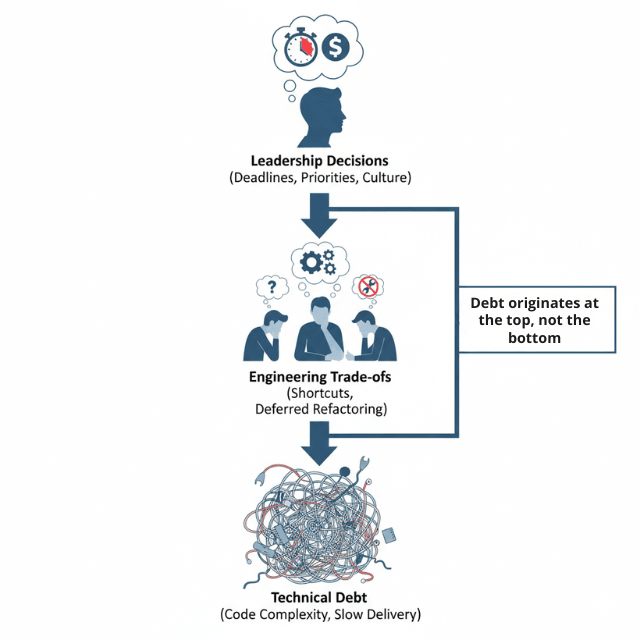
European startups face particular pressure around technical debt. Tight runway, demanding investors, and regulatory requirements like GDPR create conditions where cutting corners feels necessary. This article examines the leadership mistakes that create technical debt and how strong leadership prevents it.
Why Technical Debt Is Not Just an Engineering Issue
Engineers write the code, but leadership creates the conditions that determine code quality. A team told to ship in two weeks instead of four will make different technical choices. A company that never schedules refactoring time will accumulate debt regardless of engineering skill.
According to research from Stepsize on engineering team productivity, 75% of developers report that management pressure directly contributes to technical debt. The same study found that organizations with executive involvement in technical decisions reduce debt accumulation by 40%.
Technical debt forms through decisions, not just code. Trade-offs driven from the top shape engineering behavior. If leadership rewards shipping features and ignores code quality, engineers adapt to those incentives. Execution reflects leadership priorities.
What Technical Debt Really Is and What It Is Not
Technical debt is a metaphor borrowed from finance. Just as financial debt allows you to acquire something now in exchange for future payments, technical debt lets you ship faster now in exchange for future engineering cost.
Intentional debt results from conscious trade-offs. A team decides to use a quick solution knowing they will replace it later. This can be strategic when the cost is understood and repayment is planned.
Accidental debt accumulates without awareness. Poor decisions, unclear requirements, and inadequate planning create problems no one intended. According to Martin Fowler's technical debt analysis, accidental debt is far more dangerous because organizations do not track or plan for it.
The phrase "moving fast" often gets misused to justify all debt. Moving fast strategically means taking calculated risks. Moving fast carelessly means ignoring consequences. Leadership must distinguish between the two.
Leadership Decisions That Create Technical Debt
Prioritizing Speed Without Clear Boundaries
Pressure to ship is constant. Investors want traction. Customers want features. Competitors threaten market position. The instinct to move fast is rational.
Problems emerge when speed has no boundaries. Without definition of acceptable debt, teams take shortcuts with no plan for repayment. Short-term wins stack up into long-term problems.
McKinsey's research on technical debt found that companies spend an average of 40% of IT budgets managing technical debt rather than building new capabilities. This maintenance burden grows when leadership provides no framework for balancing speed against quality.
Lack of Ownership Over Technical Direction
When no single person owns technical decisions, accountability disappears. Teams make conflicting choices. Standards vary across the codebase. Nobody feels responsible for the overall architecture.
This ownership vacuum allows debt to accumulate in blind spots. One team takes a shortcut assuming another team will fix the integration later. The other team makes the same assumption. The fix never happens.
Treating Refactoring as Optional Work
Refactoring improves code without adding features. It reduces complexity, improves performance, and prevents future problems. Yet many startups treat refactoring as optional.
When refactoring is always postponed and never planned, debt compounds. Each new feature builds on a weaker foundation. According to Atlassian's engineering team surveys, teams that allocate 15-20% of capacity to debt reduction maintain velocity over time. Teams that allocate nothing eventually slow to a crawl.
How Leadership Gaps Allow Debt to Compound
Without clear ownership, nobody is accountable for cleanup. Technical debt becomes someone else's problem, which means it becomes nobody's problem.
Debt stays hidden until it hurts delivery. Code complexity does not appear on dashboards. Architecture problems do not generate alerts. Leadership often learns about debt only when features start taking longer or systems start failing.
Engineers forced into reactive mode cannot address root causes. They spend their time firefighting instead of improving. This creates a cycle where debt generates more debt.
The Business Impact of Leadership-Driven Technical Debt
Slower feature delivery. Each new feature must work around accumulated problems. What once took days now takes weeks. Stripe's Developer Coefficient research quantified this cost at 42 days per developer per year.
Higher infrastructure and maintenance costs. Inefficient code uses more compute resources. Poor architecture requires more operational effort. Cloud bills grow while productivity shrinks.
Team frustration and burnout. Engineers want to build things that work. Forcing them to constantly patch broken systems drives talented people away. For European startups competing for engineering talent, this attrition creates serious competitive disadvantage.
Why Founders Often Do Not See Technical Debt Until It Is Expensive
Output still appears steady in the early stages of debt accumulation. Features ship. Customers use the product. Revenue grows. The warning signs are subtle.
Problems get framed as execution issues rather than leadership failures. "We need better engineers" becomes the explanation for slowdowns, when the real issue is strategic neglect of technical health.
Cost impact delays visibility. A shortcut taken today creates pain six months from now. By the time the connection becomes clear, substantial debt has accumulated.
How Strong Technical Leadership Controls Technical Debt
Clear decision ownership. Someone must own technical direction and feel accountable for long-term health. This person balances speed against sustainability.
Planned trade-offs. Intentional debt requires explicit agreements about when and how to repay. Leadership documents shortcuts and schedules cleanup.
Dedicated time for debt reduction. Healthy engineering organizations reserve 15-20% of capacity for technical improvement. This is not optional work but strategic investment.
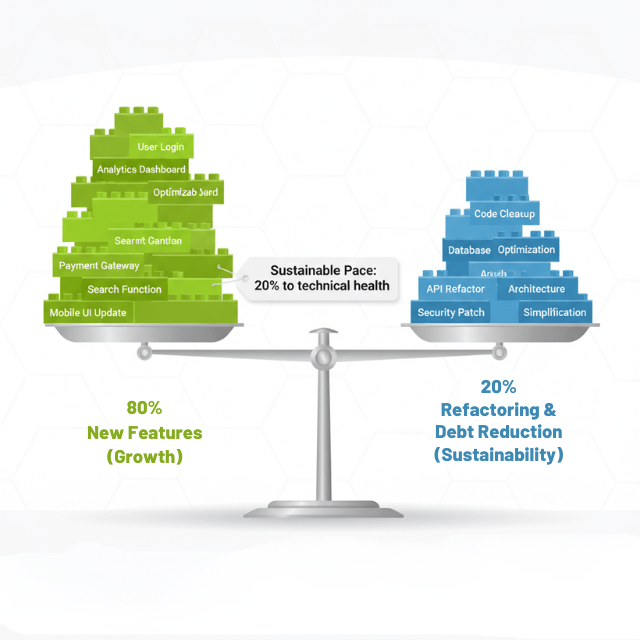
Strong technical leadership also creates transparency. Regular reporting on technical health metrics helps founders understand debt levels before they become critical. DORA metrics from Google's DevOps research provide useful frameworks for measuring engineering effectiveness.
How EaseCloud Helps Leaders Reduce Technical Debt
EaseCloud works with European startup leadership to address debt at its source. We focus on the decisions and structures that create debt, not just the code that results from them.
Identifying leadership-driven causes. We audit technical decisions and team structures to find where debt originates. Often the fixes are organizational rather than technical.
Aligning engineering with business goals. We help leadership set realistic expectations and sustainable pace. When engineering and business are aligned, debt accumulates intentionally rather than accidentally.
Creating sustainable delivery systems. We establish processes that balance feature delivery with technical health. This includes planning for refactoring, defining acceptable trade-offs, and tracking debt over time.
Contact EaseCloud to discuss how we can help your startup manage technical debt strategically.
Final Takeaway
Technical debt reflects leadership choices. The code is a symptom; decisions are the cause.
Shifting mindset from code to decisions changes how founders approach technical health. Instead of asking "why is the code bad," ask "what decisions led here." Instead of demanding engineers fix problems, examine whether leadership created the conditions that made problems inevitable.
Long-term execution health requires ongoing attention from leadership, not just engineering. The startups that scale successfully treat technical sustainability as a strategic priority, not an engineering afterthought.
FAQs
Is technical debt always bad?
No. Intentional debt with a repayment plan can be strategic. Problems arise when debt accumulates accidentally or without any plan to address it.
Who should own technical debt decisions?
Someone with authority over both technical direction and business priorities. This is typically a CTO or technical co-founder, though fractional leaders can fill this role.
When should startups invest in reducing debt?
Before it slows delivery. A good rule is allocating 15-20% of engineering capacity to technical improvement. Waiting until debt causes visible problems means waiting too long.
Can technical debt affect fundraising?
Yes. Technical due diligence during funding rounds often reveals debt levels. Excessive debt raises concerns about scalability and can reduce valuation or kill deals entirely.
How do leaders track technical debt effectively?
Combine qualitative feedback from engineers with quantitative metrics like deployment frequency, lead time, and change failure rate. Regular technical health reviews keep leadership informed.
Summarize this post with:
Ready to put this into production?
Our engineers have deployed these architectures across 100+ client engagements — from AWS migrations to Kubernetes clusters to AI infrastructure. We turn complex cloud challenges into measurable outcomes.