Why Your Engineering Team Feels Busy but Ships Less
Learn why engineering teams stay busy but ship less as startups scale. Discover how to turn activity into real output and improve delivery flow.
TLDR;
- Teams feel busy but ship less because WIP expands while completions stagnate
- Root causes: Too many concurrent workstreams, risky manual releases, hidden tech debt
- Fix it: Smaller delivery goals, automated repeatable releases, limit WIP to force completion
Your engineers work late. Standup meetings report progress. Yet releases keep slipping. This disconnect between activity and output frustrates founders across Europe who watch competitors ship while their teams struggle to finish anything.
The problem is not effort. Your team works hard. The problem is that work-in-progress expands while completions stagnate. This article explains why this happens and provides practical strategies to transform busyness into actual delivery.
The Startup Paradox: High Activity, Low Output
Engineering teams always seem "in progress" on something. Jira boards fill with tasks moving between columns. Engineers attend meetings, write code, and respond to Slack messages. Activity metrics look healthy.
Yet meaningful releases become rare. Features announced months ago remain unfinished. Founders lose confidence in timeline estimates because past predictions proved unreliable.
Atlassian's 2024 State of Teams Report found that knowledge workers spend 58% of their time on "work about work" rather than skilled, strategic tasks. This coordination overhead grows as teams scale, consuming capacity that should produce customer value.
The gap between busyness and output often surprises founders who came from non-technical backgrounds. They see people working but cannot understand why results lag expectations.
What "Being Busy" Actually Looks Like in Engineering Teams
Constant meetings fragment engineering days. Morning standups, afternoon syncs, planning sessions, and ad-hoc discussions leave engineers with fragmented time blocks insufficient for deep work.
Cal Newport's research on deep work demonstrates that complex problem-solving requires uninterrupted focus periods of 60-90 minutes minimum. When calendars fill with 30-minute meetings scattered throughout the day, engineers struggle to make meaningful progress on difficult tasks.
Large tasks with slow completion create the illusion of progress. A feature "80% done" might remain at 80% for weeks while the final integration, testing, and edge cases consume unexpected time. The Standish Group's CHAOS Report 2024 indicates that software projects routinely underestimate completion by 50-100%.
Firefighting instead of progress keeps teams reactive. When production issues demand immediate attention, planned work stops. Engineers context-switch to debugging, patch problems, then struggle to resume their original tasks. This pattern repeats weekly, sometimes daily.
The Real Reasons Shipping Slows Down
Too Many Workstreams at Once

When teams pursue multiple priorities simultaneously, nothing finishes. Little's Law, a fundamental principle from queueing theory, states that lead time equals work-in-progress divided by throughput. More concurrent work means longer delivery times.
European startups often face this problem acutely. Investor pressure, customer requests, and competitive threats create constant temptation to start new initiatives. Features end up half-done everywhere while customers wait for complete solutions.
No clear delivery focus means engineers split attention across projects. They make incremental progress on five things while finishing zero. The backlog grows, stakeholder frustration increases, and the cycle continues.
Manual and Risky Release Processes
Fear of deployments emerges from past incidents. When releases cause outages, teams become cautious. They batch more changes into each release, which paradoxically increases risk and makes problems harder to diagnose.
Long stabilization periods follow major releases. Engineers spend days fixing bugs that QA missed, addressing performance issues that appeared only in production, and handling edge cases from real user behaviour. These unplanned cycles steal time from the next feature.
Google's research on deployment practices found that high-performing teams deploy small changes frequently rather than large releases occasionally. Smaller changes are easier to review, test, and roll back when problems occur.
Hidden Technical Debt
Small changes taking longer than expected signal accumulated debt. Engineers estimate a task at two days, then discover dependencies, outdated documentation, and fragile tests that extend the work to two weeks.
Fragile systems slow confidence. When modifying one component risks breaking others, engineers move cautiously. They add workarounds instead of proper fixes, compounding the problem for future changes.
Martin Fowler's technical debt quadrant distinguishes between deliberate and inadvertent debt. Both types accumulate interest that manifests as slower development and more bugs.
Why Founders Often Misread the Problem
Effort gets mistaken for progress. Long hours and busy calendars suggest hard work. But output measures value delivered, not time invested. A team working 60-hour weeks while shipping nothing has a systemic problem that overtime cannot solve.
Hiring gets used as a solution. Adding engineers to a struggling team rarely accelerates delivery. Brooks's Law observes that adding people to a late project makes it later. New team members require onboarding, create coordination overhead, and take months to become productive.
Pressure replaces systems. When founders push harder on deadlines, teams cut corners. Quality drops, bugs increase, and technical debt accumulates faster. The next project takes even longer, prompting more pressure in a destructive cycle.
How Delivery Systems Quietly Shape Output
Environment reliability determines how quickly engineers can test their work. When staging environments break frequently or take hours to provision, feedback loops extend and velocity drops.
CI/CD maturity affects release confidence. CNCF's Annual Survey 2024 shows that 82% of organizations use CI/CD pipelines, but maturity varies dramatically. Immature pipelines that fail randomly or take 45 minutes to run create bottlenecks that slow the entire team.
Release confidence comes from reliable rollbacks, feature flags, and monitoring. When teams trust their ability to detect and reverse problems quickly, they deploy more frequently and in smaller batches.
Signals Your Team Is Stuck in "Busy Mode"
Long lead times indicate systemic issues. Track the time from when work starts to when it reaches production. If this metric keeps increasing, your delivery system needs attention.
Increasing unfinished work suggests too much concurrent activity. Count items in progress versus items completed each sprint. A healthy ratio shows completions outpacing new starts.
Fewer releases over time reveals declining velocity. Plot deployment frequency monthly. Downward trends require investigation into what changed.
How High-Performing Teams Turn Activity Into Output
Smaller, clearer delivery goals reduce ambiguity. Instead of "improve performance," define "reduce API response time from 500ms to 200ms for the dashboard endpoint." Specific goals enable focused execution.
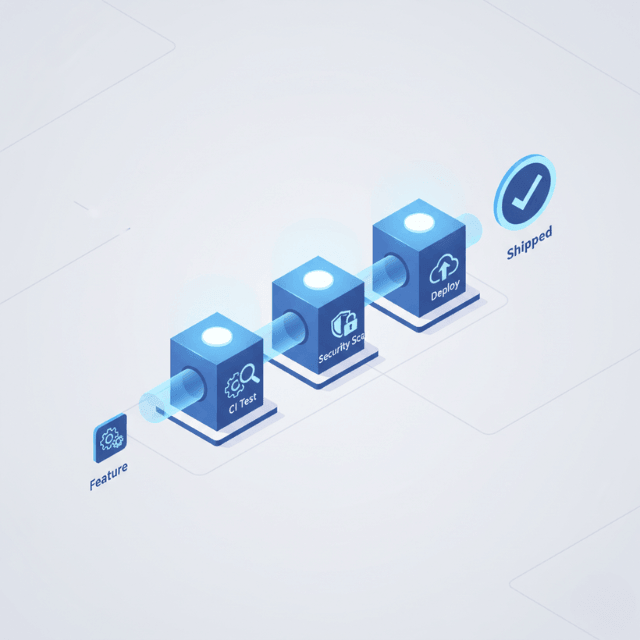
Safer, repeatable releases come from automation and standardization. DORA's research demonstrates that deployment frequency correlates with organizational performance. Teams that deploy daily or weekly outperform those deploying monthly or quarterly.
Fewer priorities mean better flow. Limiting work-in-progress forces completion before starting new work. This simple constraint often produces immediate improvements in delivery velocity.
How EaseCloud Helps Teams Ship More Without Burning Out
EaseCloud partners with European startups to transform delivery capability. Our delivery workflow audits identify where time disappears between planning and production.
Deployment and infrastructure improvements create reliable foundations. We implement CI/CD pipelines that run in minutes, provision consistent environments automatically, and establish monitoring that surfaces problems before users notice.
Removing friction from release cycles means examining every step from code commit to production. Small improvements compound. Reducing a 30-minute deployment to 5 minutes saves hours weekly and changes how your team thinks about releases.
Stop watching your team spin. Book a delivery assessment to identify the systemic issues holding back your output and create a plan to fix them.
Final Takeaway: Output Comes From Focus and Flow
A sustainable delivery mindset prioritises finishing over starting. High-performing teams resist the urge to begin new work before completing existing commitments.
Systems over pressure produces lasting results. Investing in automation, reducing work-in-progress limits, and establishing clear ownership creates conditions where teams naturally ship faster.
The busiest teams are not the most productive. Productivity comes from removing obstacles, creating focus, and building systems that turn effort into output.
FAQs: Product Delivery and Engineering Productivity
Why do engineering teams feel busy but deliver less?
Teams accumulate work-in-progress while coordination overhead consumes capacity. Meetings, context switching, and firefighting absorb time that should produce features. The result is constant activity without corresponding output.
Does hiring more engineers help delivery speed?
Rarely in the short term. New hires require onboarding and create coordination overhead. Fixing process issues and reducing work-in-progress typically yields faster results than adding headcount to a struggling team.
How much does DevOps impact shipping frequency?
Substantially. DORA research shows elite DevOps performers deploy on demand, while low performers deploy monthly or less frequently. The technical capability to release confidently enables faster iteration.
What is the fastest way to improve delivery flow?
Limit work-in-progress. Stop starting new work until existing items finish. This simple intervention often produces immediate improvements by forcing focus and exposing hidden bottlenecks.
How do founders measure real engineering output?
Track lead time, deployment frequency, change failure rate, and mean time to recovery. These DORA metrics provide objective measures of delivery capability that correlate with business outcomes.
Summarize this post with:
Ready to put this into production?
Our engineers have deployed these architectures across 100+ client engagements — from AWS migrations to Kubernetes clusters to AI infrastructure. We turn complex cloud challenges into measurable outcomes.